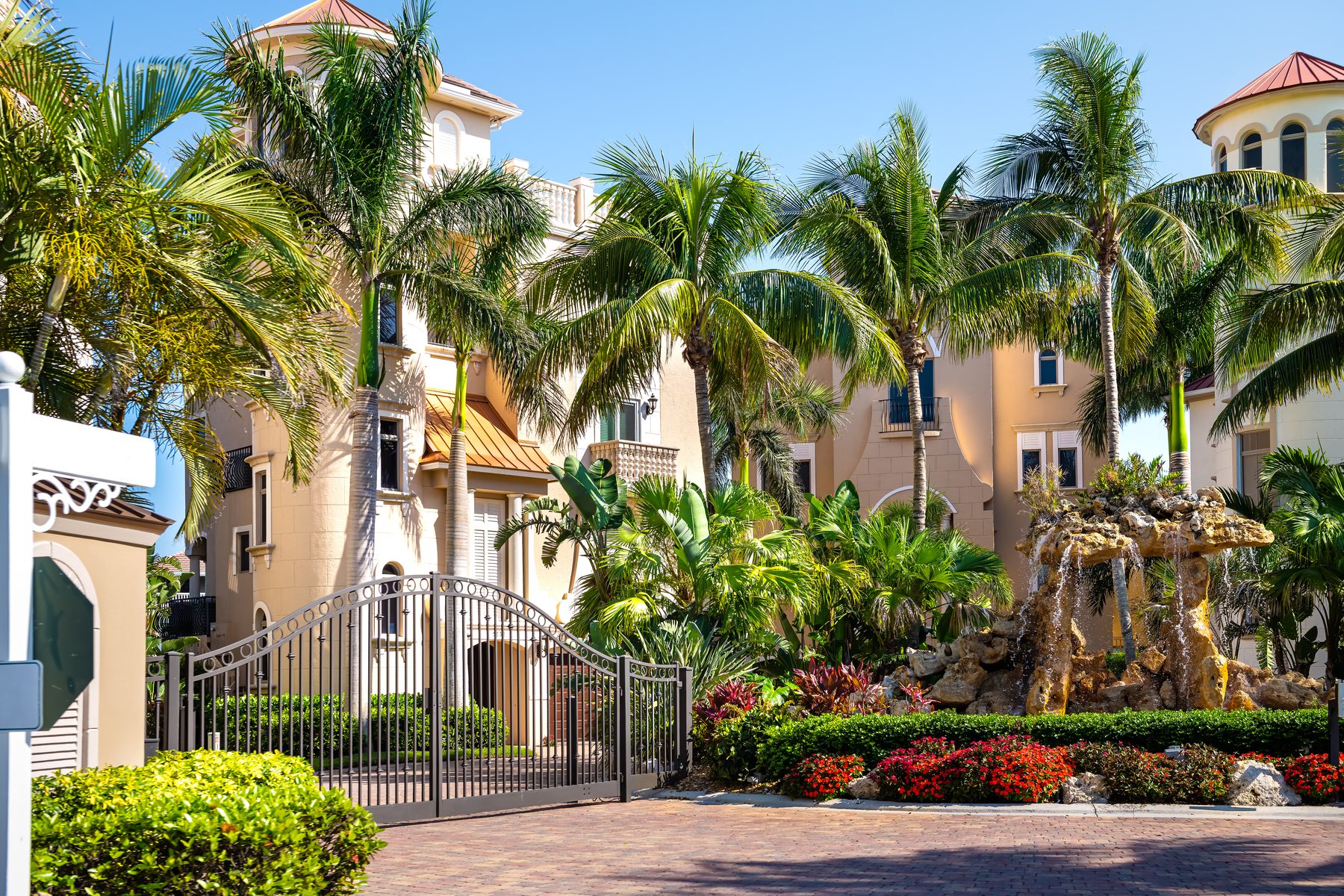
Yes — in most cases. Bonita Springs is roughly 75% gated or deed-restricted, which means most buyers purchasing within a community will need to apply for and receive HOA or condo association approval before closing. The process typically involves a buyer application, background check, financial review, and sometimes an interview. Approval can take anywhere from two to six weeks, and missing the application deadline can delay — or derail — your closing.
If you're buying in Bonita Bay, Bonita National, or almost any gated community off US 41, this step surprises a lot of buyers. It's not a formality — it's a real process with a real timeline, real paperwork, and sometimes a real interview.
Why HOA approval exists — and matters more here than most places
Florida law gives associations significant authority to screen prospective buyers, and it matters more in Bonita Springs given how much of the market is built this way — communities like Bonita Bay (2,400 acres, five championship golf courses, a private marina), Bonita National Golf & Country Club, Palmira, and Talis Park all have boards and management companies that take screening seriously.
Associations can look at criminal history, financial background (past bankruptcies or foreclosures), and completeness of application materials. What they cannot do is deny a buyer for reasons that violate the Fair Housing Act — race, national origin, religion, sex, disability, or familial status. If governing documents require approval, closing cannot legally proceed without it — most purchase contracts in these communities include an HOA approval contingency, so a denial or significant delay typically lets you terminate with your earnest money returned.
What the buyer application process actually looks like
Step 1: Get the application as soon as you're under contract
The moment your offer is accepted, your agent should request the buyer application package — don't wait for the inspection period to end. Many communities require submission at least 30 days before closing.
Step 2: Complete and submit with all required documents
Most applications ask for: a completed form (2–5 pages), government-issued photo ID for all occupying adults, authorization for background and credit checks, proof of mortgage pre-approval or funds, pet and vehicle information, and a non-refundable application fee ($100–$300 per applicant). Incomplete applications are the most common cause of delay — respond to any HOA request within 24–48 hours.
Step 3: Background and financial review
Something surfacing in your background or financial history doesn't automatically mean denial, but it may trigger a request for more information or board review. Transparency beats silence here.
Step 4: The buyer interview (some communities require this)
Larger, amenity-rich communities — especially those with private clubs, golf memberships, or marinas like Bonita Bay — sometimes require a short interview (15–30 minutes, in person or video), designed to confirm you understand the community's culture, not to grill you. If the board only meets monthly, this alone can add 3–4 weeks to your timeline, so find out whether an interview is required before going under contract.
Approach the interview as a conversation, not an interrogation — most boards just want to confirm you genuinely want to live there.
Step 5: Approval — and what happens next
Most communities respond within 2–4 weeks of a complete application. If denied, the association must disclose why, based on their governing documents, and your contract's HOA contingency typically lets you terminate with earnest money returned. If you don't receive a decision by your contract deadline, you may have the option to extend or terminate.
The estoppel letter: what it is and why you can't close without it
Separate from buyer approval, your title company requests an estoppel letter — a certified statement of exactly what the seller owes in dues, assessments, and fees as of closing. In Florida, buyers can be held jointly liable for a seller's unpaid HOA balance if no estoppel is obtained, so this document caps your exposure. Florida law caps estoppel fees at $299 for a non-delinquent account (typically seller-paid), requires delivery within 10 business days (3 for an expedited request, for a fee), and the document is valid 30–35 days depending on delivery method.
What can delay or derail approval
- Starting too late — begin the day you're under contract, not after the inspection period
- Incomplete applications — missing documents or signatures trigger costly back-and-forth
- Board meeting schedules — some associations meet only once a month
- Not budgeting for expedited fees if your timeline is tight
- Not budgeting for application fees generally — plan for $100–$500 total, non-refundable in most cases even if the deal falls apart for unrelated reasons
HOA fees: a separate but related consideration
Fees vary significantly by community — $2,000–$3,000 annually in a basic gated community, or $12,000–$25,000 annually in a full-amenity club community like Bonita Bay where master association, village association, and club membership fees all stack. Your agent should have current HOA fee disclosures for any property you're seriously considering. And remember CDD fees are entirely separate — see our CDD fees guide for how those stack on top in newer communities.