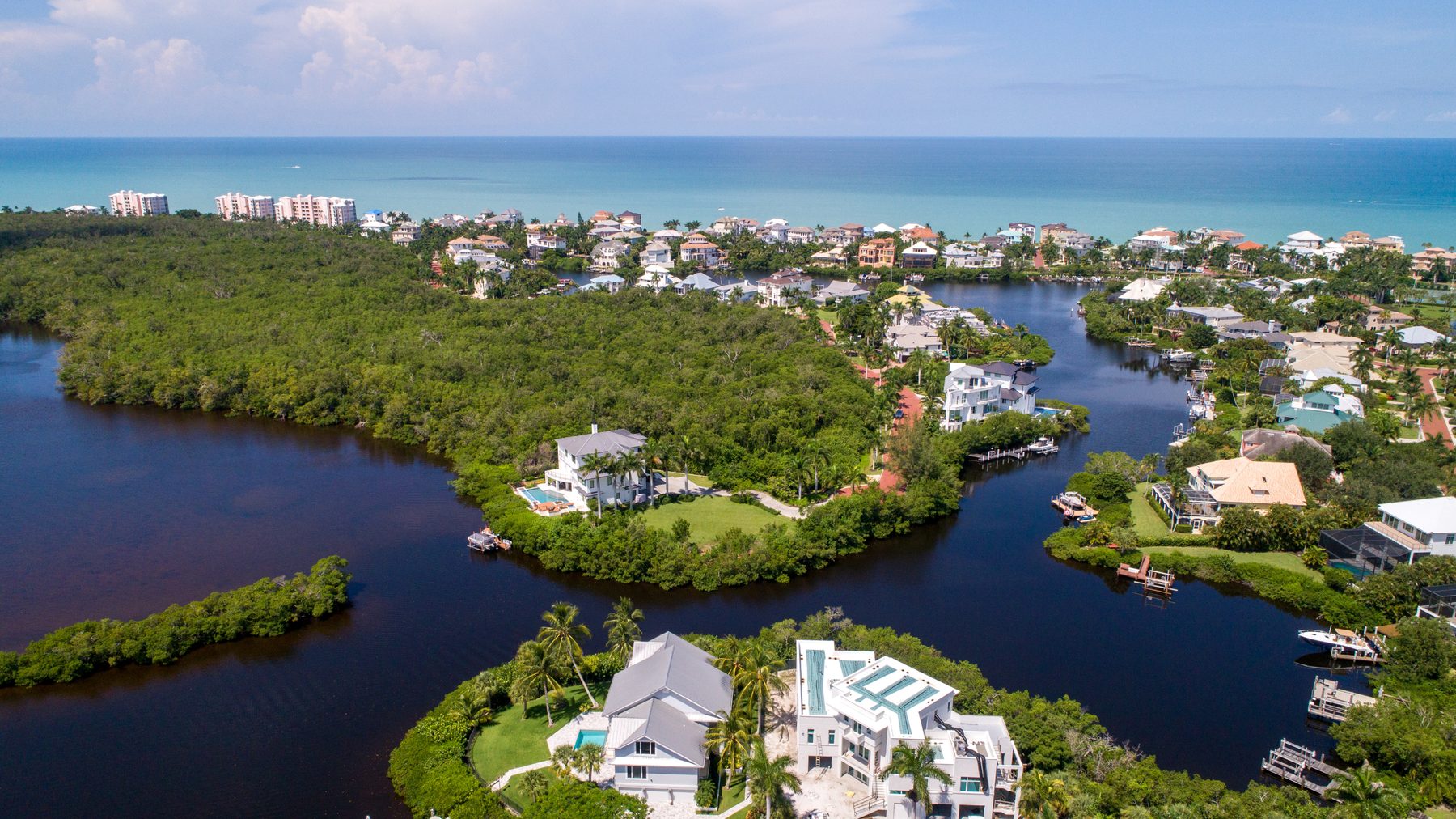
Bonita Beach is a Gulf-facing barrier island community in Bonita Springs (Lee County), where most properties fall within FEMA flood zones AE or VE, flood insurance is typically required for mortgaged purchases, and short-term rental policies vary significantly by building — from weekly rentals allowed to 30-day minimums to full prohibitions. Condos range from the high $400s to well over $2 million; canal-front homes with boating access typically run $800K–$2.5M. Before making an offer, buyers need to verify the flood zone for the specific address, review the condo's reserve funding and pending special assessments, and read the HOA documents for rental restrictions — ideally before falling in love with a floor plan or a Gulf view.
Buying here isn't like buying in a master-planned community — no builder welcome center, no CDD disclosure package on the counter. Instead it's a building-by-building market where two units in the same complex can have wildly different insurance costs, rental rules, and reserve situations. Here's what we walk every Bonita Beach buyer through before they submit anything.
What you can buy — and what it costs
The market is dominated by mid-rise Gulf-front condos built between the 1970s and 1990s. Pricing in mid-2026: Gulf-front condos run high $400s–$800K for older, lower-floor units, and $900K–$2M+ for higher floors and direct beach views. Canal-front homes with boating access generally run $800K–$2.5M. The median home price was running around $777,000 in early 2026, with 100+ active waterfront listings at any time — more inventory than typical, giving buyers real negotiating room, especially in older buildings that haven't addressed reserve or inspection issues yet. There's no new construction here — buildable land is essentially gone, so every purchase is a resale, making due diligence on building condition and reserves critical.
Flood zones and insurance: the number you need before you offer
Most of Bonita Beach sits in FEMA Zone AE — the standard high-risk designation, at least 1% annual flood probability, mandatory flood insurance for any financed purchase. Gulf-front properties along the immediate coastline are typically Zone VE, the coastal high-hazard zone with added wave-action exposure and the highest premiums under the NFIP.
FEMA's national average for flood insurance runs around $938/year — but that's across all risk levels nationally. In Zone VE on the Gulf coast, combined flood and wind coverage on a Bonita Beach condo can easily run $10,000–$20,000/year or more depending on floor elevation, construction type, and coverage amount.
We've seen buyers budget $4,000 for insurance and discover the actual number is closer to $12,000. That changes the math entirely.
Before submitting an offer, ask your agent to request the unit's elevation certificate (can dramatically reduce your quote), a wind mitigation report (retrofitted impact glass and reinforced roofing can qualify for 10–45% reductions), and a four-point inspection if the building is older — some insurers require it just to offer a policy. See our Lee County FEMA flood map changes guide — 722 properties were added to high-risk zones in July 2026, with Mullock Creek Basin properties specifically affected.
Short-term rental rules: why building-by-building research matters
Bonita Beach is one of the strongest short-term rental markets in Southwest Florida — the city doesn't prohibit vacation rentals, and January–March rentals regularly fetch $5,000–$8,000/month for well-positioned condos. But just because the city allows it doesn't mean your specific building does. Every condominium has its own declaration and association rules governing whether and how you can rent: some buildings allow weekly rentals, many require a 30-day minimum, and some prohibit rentals entirely or limit to once a year.
These rules don't appear on MLS listings — they're in the condominium declaration, which must be provided under Florida law, with a typical 3-day window to review HOA documents and cancel without penalty. Actually reading the rental restriction clause before that window closes is the critical step. If rental income is part of your financial model, tell your agent before you start touring. Florida also requires a state vacation rental license from the DBPR for any unit rented under 30 days more than three times a year, plus 6% state sales tax and 5% Lee County Tourist Development Tax on every booking — budget these into your income projections from day one.
The pre-offer checklist every Bonita Beach buyer needs
Because the market skews toward older buildings, Florida's post-2022 condo reform (SB 4-D milestone inspection requirements) has created meaningful price divergence between buildings in good shape and those carrying deferred maintenance or underfunded reserves. Before submitting an offer, gather:
- The most recent reserve study — look for funding at 70% or higher as a general benchmark; underfunded reserves increase special assessment risk
- The last 12–24 months of HOA financial statements — watch for operating deficits, pending legal issues, unusual expenses
- Any pending or approved special assessments — disclosed in the estoppel letter at closing, but worth asking early to price in before you're attached
- The milestone inspection report, if the building is 30+ years old (required for buildings 3+ stories within 3 miles of the coast) — tells you whether structural repairs are required and the timeline
- The declaration's rental restriction provisions — minimum period and frequency
- The current master insurance policy — what the building covers versus what you'll need in an individual HO-6 policy
Buildings that pass this checklist cleanly trade at a premium right now. Buildings with open questions are where buyers can sometimes negotiate — if they understand what they're taking on. Neither is automatically a bad deal; what matters is deciding with full information.
Explore the neighborhood in depth at our Bonita Beach community guide.