What do I need to know before moving to Cape Coral, FL?
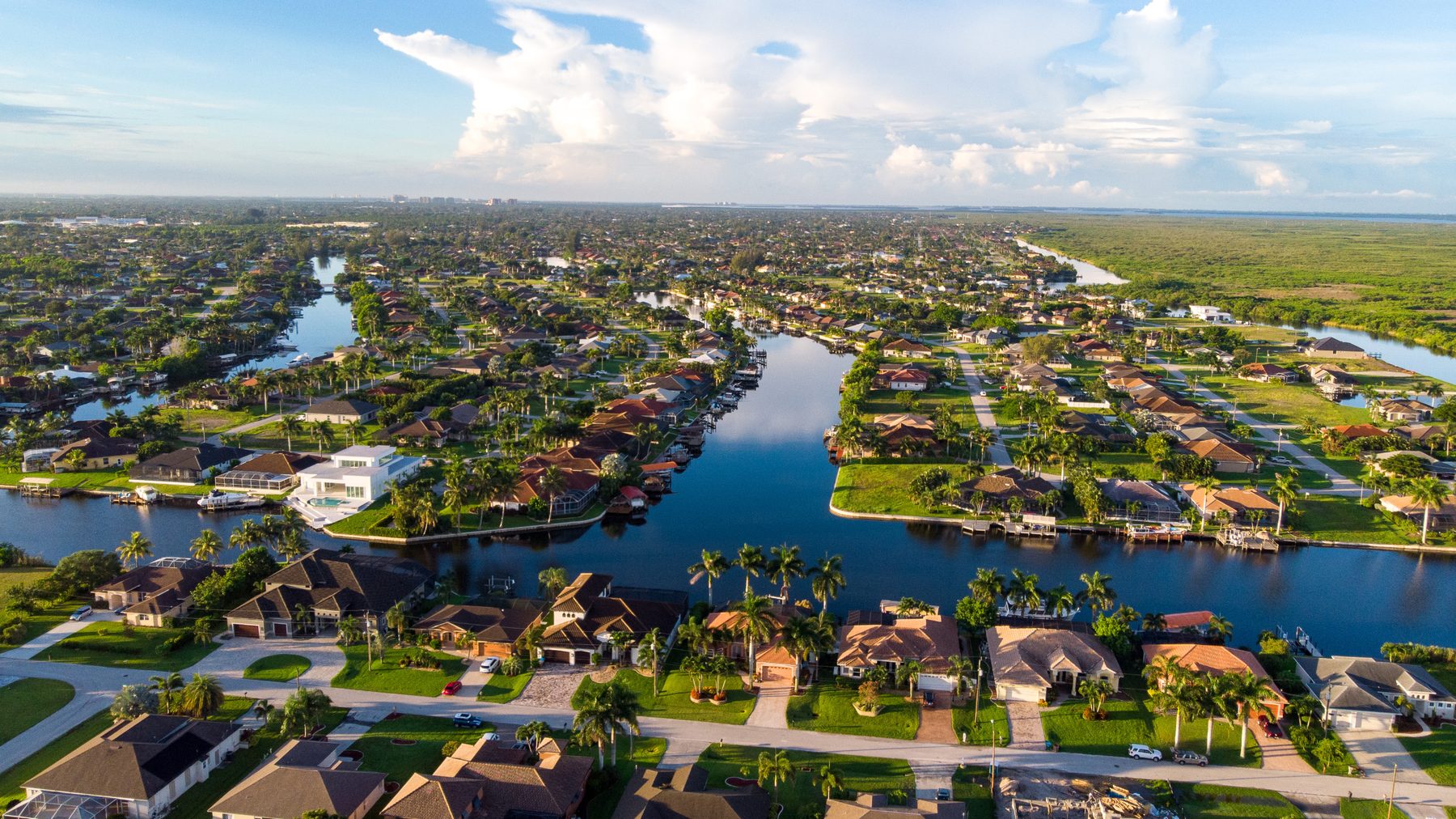
Cape Coral is a 120-square-mile planned city with over 400 miles of navigable canals — more than any other city in the world. As of August 2026, the median sale price is approximately $379,749 in a buyer's market, with most sellers accepting 3–5% below asking and homes averaging 66 days on market. Most single-family homes carry no HOA. The biggest financial surprises for relocators are combined homeowner and flood insurance (often $5,000–$10,000+ per year on canal properties), the property tax reset when you purchase (plan for pre-homestead rates your first year), and the Utilities Extension Project (UEP) assessment that applies to parts of northwest Cape Coral. There are no Gulf beaches within city limits — Fort Myers Beach is the nearest, typically 30+ minutes away.
Here's what most people don't understand about Cape Coral until they're already packing boxes: it's not a suburb. It's not a beach town. It's not another version of Naples or Fort Myers.
Cape Coral is its own thing — 120 square miles of planned city built around more canals than anywhere else on Earth, designed around the idea that waterfront living shouldn't require a waterfront budget. That promise still holds in 2026, but only if you know where the traps are.
We've helped hundreds of families relocate to Southwest Florida. Cape Coral surprises more of them than almost any other city in our market — not because it's a bad choice, but because the questions you need to ask aren't the ones you'd think to ask from Ohio, New York, or Michigan.
This is the guide we wish every Cape Coral buyer had before they started searching.
Why Cape Coral?
Let's start with what makes this city genuinely special.
Cape Coral has 400+ miles of navigable waterways — more than Venice, Italy. The canal system was the entire point when General Development Corporation laid out the city in the 1950s. You can pull a boat from your backyard, run through an interconnected waterway, and reach the Gulf of Mexico. No marina fees. No slip rental. Just your dock, your boat, and open water.
That's not a marketing line. It's a lifestyle that exists here and almost nowhere else at this price point.
Add to that: no state income tax in Florida, newer housing stock (much of Cape Coral was built after 1990), larger lot sizes than comparable Gulf Coast cities, and median home prices near $380,000 in a buyer's market where sellers are motivated. For families, retirees, and remote workers who want space, water access, and sunshine — Cape Coral is one of the most compelling values in Southwest Florida.
And right now, the market is firmly in your corner.
The Market Right Now
As of August 2026, here's where Cape Coral stands:
- Median sale price: $379,749 (+5.8% year-over-year)
- Average days on market: 66 days
- Price per square foot: $219
- Homes with price reductions: 41.2% of active listings
- Sale-to-list ratio: 96.9% — most homes close below asking
- Market competitiveness (Redfin Compete Score): 34 out of 100
That Compete Score tells you everything. On non-waterfront and older inventory in the $420K–$700K range, you have real negotiating room — sellers are accepting 3–5% below asking and often throwing in concessions: closing cost credits, rate buydowns, or repairs you'd otherwise pay out of pocket.
The entry segment ($280K–$420K) moves faster, but even there you're not competing in a bidding war frenzy. This is as buyer-friendly as Cape Coral has been since 2019. If you're relocating from a high-cost market in the Northeast or Midwest, the buying power difference here is striking.
Understanding Cape Coral's Four Quadrants
Cape Coral is divided into four sections — SW, SE, NW, and NE. They are not interchangeable. Where you buy determines your infrastructure, your canal access, your insurance exposure, and your hidden costs.
Southwest Cape Coral
The most established quadrant. Proximity to Bimini Square (the city's emerging downtown waterfront), the Cape Coral Yacht Club, and direct connection to the Caloosahatchee River. Gulf-access canals are abundant here. City water, sewer, and irrigation are already in place — you're buying a finished product. Prices skew higher than the rest of the city, but for good reason.
Southeast Cape Coral
Similar infrastructure maturity to the southwest, with good access via the midpoint bridge to Fort Myers. A mix of older homes and renovated properties, with strong Gulf-access canal inventory. A solid choice if you want established neighborhoods without the highest price premium.
Northwest Cape Coral
The fastest-growing quadrant and the most complicated for buyers. New construction is happening here at scale — prices of $330,000–$550,000 for new builds are among the most affordable for new product in the entire Southwest Florida market. But large parts of northwest Cape Coral are still on private wells and septic systems, which means the city's Utilities Extension Project (UEP) may be headed for your property tax bill.
The UEP extends municipal water, sewer, and irrigation to unserved areas of the city. Assessment costs are spread over 20–30 years and appear as a non-ad valorem line on your property tax bill. Before you close on any northwest Cape Coral property, you need to know: is this property in a current UEP assessment district? If not, is it in a planned future phase? Your agent can pull the city's assessment records — this should be standard due diligence on every NW Cape Coral purchase.
Northeast Cape Coral
The most affordable quadrant — older inventory, smaller lots, fewer canal-front options. If your goal is to enter Cape Coral at the lowest price point while building equity, the northeast has pockets worth exploring. You'll be in infrastructure similar to much of the northwest: some areas on city utilities, some on well/septic.
The Canal Question Nobody Asks — Until It's Too Late
If you're looking at canal-front homes in Cape Coral — and you should be, it's the whole point — there's one distinction that changes everything: Gulf-access canals vs. non-Gulf-access canals.
Gulf-access canals connect (directly or through a series of waterways) to the Caloosahatchee River and ultimately to the Gulf of Mexico. If you have a boat or plan to get one, this is what you're buying. Properties on Gulf-access canals carry a significant premium over comparable non-waterfront homes.
Non-Gulf-access canals — also called freshwater canals or spreader canals — are landlocked. Your home is waterfront, the view is beautiful, and in some cases your flood insurance exposure may actually be lower. But you cannot boat your way to open water. The canal sits there. It doesn't connect to anything navigable.
We've seen buyers fall in love with a listing showing canal views without ever asking which type of canal it is. "Canal front" does not imply Gulf access. Ask explicitly. Verify on the GIS map. Factor the distinction into your decision before you make an offer — because it affects both your lifestyle and your resale value, permanently.
Cost of Living in Cape Coral: The Full Picture
Cape Coral looks affordable compared to Sarasota or Naples. It is — but the carrying cost picture includes line items that simply don't exist in Ohio, Michigan, or New York.
Housing by Property Type
- Non-waterfront single-family: $280,000–$450,000
- Freshwater canal homes: $310,000–$520,000
- Gulf-access waterfront: $420,000–$750,000
- Direct sailboat access: $700,000–$1.5M+
- New construction (NW Cape Coral): $330,000–$550,000
Property Taxes
Lee County's combined millage rate runs approximately 17–20 mills. On a $380,000 purchase, plan for a gross tax bill around $6,500–$7,600 in year one — before any exemptions. That number will surprise relocators accustomed to tax-capped northern states.
The good news: once you establish Florida as your primary residence and file for the homestead exemption (deadline is March 1 of the year following your purchase), your taxable value drops by $50,000. A home purchased at $380,000 gets assessed at $330,000 for exemption purposes. From there, the Save Our Homes cap limits future assessed value increases to 3% per year or the Consumer Price Index — whichever is less. Over time, that protection compounds significantly. Year one, budget without it. Every year after, it works in your favor.
We walk every out-of-state client through this calculation before they close. The first-year tax number shocks people who aren't prepared for it.
Insurance — The Biggest Budget Item Most People Miss
This is where most relocators get caught off guard. Cape Coral's insurance market is not like anywhere you've lived before.
- Homeowners insurance (non-waterfront, post-2000 build): $2,500–$4,500/year
- Homeowners insurance (waterfront): $4,500–$9,000+/year
- Flood insurance (Zone X — minimal risk): $600–$1,200/year
- Flood insurance (Zone AE — 100-year floodplain): $1,500–$4,500+/year
- Flood insurance (Zone VE — coastal high hazard): $4,500–$8,000+/year
Combined homeowner and flood insurance on a canal home in a flood zone can run $7,000–$10,000+ per year. That's $580–$833 per month in insurance alone — a number that doesn't appear in any Zillow estimate. Budget this before you fall in love with a property, not after.
Before you close on any Cape Coral home — especially one built before 2000 — you'll need a four-point inspection covering roof, HVAC, electrical, and plumbing. Insurance companies use this report to determine coverage eligibility. A roof over 15–20 years old, Federal Pacific or Zinsco electrical panels, or aging polybutylene plumbing can make a home uninsurable through the standard market. You'll also want a wind mitigation inspection, which documents hurricane-resistant features (impact windows, reinforced roof-to-wall connections, and so on). A good wind mitigation report can reduce your homeowner's premium by $500–$1,500 per year.
Ask for both inspection reports from the seller if they exist. If they don't, order them during your inspection period before you remove contingencies.
HOA Fees (or Lack Thereof)
Most Cape Coral single-family homes carry no HOA. This is one of the city's biggest differentiators from the Estero, Bonita Springs, and Naples markets, where HOA fees of $300–$600/month are standard and unavoidable in most communities. Cape Coral's master-planned origins predate the HOA era, and the result is a city where your $380,000 home may come with no monthly association dues at all.
Condominiums and a small number of planned communities do carry HOA fees ($600–$1,200/month is typical for condos). Some newer developments in northwest Cape Coral have CDD (Community Development District) fees — $1,500–$3,500/year — appearing as a separate line on your property tax bill. For a deep dive on what CDD fees mean for buyers, our CDD fees guide for Southwest Florida buyers covers all the specifics.
Utilities
- Electric (FPL): Summer months average $250–$420/month; winter $80–$140/month; annual average $170–$220/month
- Water and sewer (where city-connected): $70–$110/month
- Internet: $60–$100/month
Those summer electric bills will stun you the first year. Your AC runs constantly from June through October. Budget accordingly, and invest in a smart thermostat and proper insulation inspection if you're buying an older home.
What's Happening in Cape Coral Right Now
Cape Coral has historically had one problem: no real downtown. That's changing.
Bimini Square opened in early 2026 — a mixed-use waterfront development on the Bimini Basin featuring restaurants, retail, a Lee Health medical facility, and public gathering space. It's the most significant downtown activation in the city's history, and local reception has been strong.
Adjacent to it, Bimini Basin East — a proposed $500 million development on 34 acres — is working through council approval as of fall 2026. If it proceeds, it would create a walkable waterfront district that's been absent from Cape Coral's identity.
This doesn't make Cape Coral a walkable city — not yet, and possibly not for years. But there's a credible vision emerging for what the city's core could become, and early execution of Bimini Square suggests the momentum is real.
Healthcare, Schools, and Amenities
Healthcare: Lee Health has expanded aggressively into Cape Coral — new convenient care facilities on Cape Coral Parkway and at Bimini Square, plus the Cape Coral Hospital on Del Prado serving as the primary acute care facility. Lee Memorial Hospital in Fort Myers (20 minutes east) handles more specialized services. For major medical centers and tertiary care, Naples Community Hospital and NCH Baker Hospital are 45–55 minutes south.
Schools: Cape Coral is served by Lee County School District. The city's public high schools include Mariner High School, Island Coast High School, and Ida S. Baker High School. Charter school options and private schools supplement the public offerings, and Hodges University offers adult and professional degree programs nearby.
Amenities: Sun Splash Family Waterpark, Four Freedoms Park, Cape Coral Yacht Club (public boat ramp access), Tarpon Point Marina, the Cultural Park Theatre, and a growing dining corridor along Cape Coral Parkway and Pine Island Road. The River District in Fort Myers — about 20 minutes east — offers a more robust restaurant and entertainment scene when you want a night out.
The one thing Cape Coral doesn't have: Gulf beaches. Fort Myers Beach is the closest, and in season (January through April), that 30-minute drive can stretch significantly. If daily beach access is central to how you imagine your life here, Cape Coral may not be the right fit. If you'd visit the beach occasionally but prefer spending your weekends on the water from your own backyard, it's exactly the right trade-off.
What Out-of-State Buyers Need to Know About the Purchase Process
Florida closes through a title company — not an attorney, as many northeastern and midwestern states require. In Lee County, it's customary for the seller to pay for the owner's title insurance policy (unlike Collier County, where buyers typically pay). That distinction matters when you're negotiating and budgeting closing costs.
Florida's transfer tax — called doc stamps — runs $0.70 per $100 of sale price, paid by the seller. On a $380,000 purchase, that's $2,660 on the seller's side. Your closing costs as a buyer include your lender's title insurance, recording fees, prepaid insurance, and your escrow reserve. Budget 2–3% of purchase price for total buyer-side closing costs.
You'll need to verify the FEMA flood zone before going under contract. The Seller's Property Disclosure (Florida's SPDR form, updated in 2025 to include mandatory flood history disclosure) will indicate known flood history and flood zone — but verify independently with FEMA's Flood Map Service Center or your insurance agent. Zone X vs. AE is a $2,000–$4,000/year difference in your insurance bill.
If you're buying remotely — which many of our out-of-state clients do — the process is very manageable with the right team in place. Our guide to buying a home sight unseen in Southwest Florida walks through virtual walkthroughs, remote inspection strategies, and how to protect yourself when you can't be here in person for every step.
One timing note that catches almost every new Florida buyer: the homestead exemption application deadline is March 1. If you close on a Cape Coral home between now and December and establish Florida primary residency before year-end, you're eligible to apply by March 1 for the following tax year. Miss that deadline and you wait a full additional year. Your title company will give you the application, or you can apply directly with the Lee County Property Appraiser's office. Put a reminder in your phone the day you close.
Common Relocation Mistakes in Cape Coral
We see these consistently:
- Buying the wrong canal type. Falling in love with "canal front" without confirming whether the canal has Gulf access or not — and discovering the distinction post-close.
- Underestimating insurance. Seeing a great purchase price, then getting the insurance quote and realizing it changes the math entirely. Get insurance quotes during your inspection period, not after.
- Ignoring UEP status. Buying in northwest Cape Coral without checking whether the property is in a current or planned UEP assessment area — and then receiving an assessment notice after closing.
- Skipping the four-point inspection. Particularly on homes built before 2000. This is not optional — it determines whether you can get standard homeowner's insurance at all.
- Missing the homestead exemption deadline. The March 1 cutoff is firm and non-negotiable. Don't let a busy first month of homeownership cost you a full year of tax savings.
- Expecting beach access. Cape Coral has no Gulf beaches. If daily beach proximity is part of your vision, this needs to be a primary decision factor — not an afterthought.
Frequently Asked Questions
What is the average home price in Cape Coral, FL in 2026?
As of August 2026, the median sale price in Cape Coral is approximately $379,749 — up 5.8% year-over-year. Non-waterfront homes typically range from $280,000–$450,000, freshwater canal homes from $310,000–$520,000, and Gulf-access waterfront from $420,000–$750,000. The market is buyer-friendly, with 41.2% of active listings showing price reductions and most homes closing around 3% below the original asking price.
Does Cape Coral have HOA fees?
Most single-family homes in Cape Coral carry no HOA — one of the city's biggest differentiators from markets like Estero, Bonita Springs, and Naples, where HOA fees of $300–$600/month are standard. Condominiums typically carry fees of $600–$1,200/month. Some newer communities in northwest Cape Coral have CDD fees of $1,500–$3,500/year on the property tax bill. Always confirm HOA and CDD status before making an offer.
What are flood zones like in Cape Coral, FL?
Cape Coral has a mix of FEMA flood zones. Zone X carries minimal flood risk and lower insurance costs ($600–$1,200/year). Zone AE covers 100-year floodplain areas — common along Gulf-access canals — with flood insurance of $1,500–$4,500+/year. Zone VE (coastal high hazard) carries the highest premiums. Before making an offer on any Cape Coral home, verify the flood zone using FEMA's flood map or through a local insurance agent — it directly affects both your annual costs and the property's insurability.
What is the Utilities Extension Project (UEP) in Cape Coral, and does it affect buyers?
The UEP extends municipal water, sewer, and irrigation service to parts of Cape Coral — primarily northwest — that currently rely on private wells and septic systems. Property owners in UEP districts pay a special assessment spread over 20–30 years via their property tax bill. Buyers need to verify before closing whether the property is in a current UEP district, whether an assessment is already running, and whether the area is in a future planned phase. Your real estate agent and the City of Cape Coral's assessment records can confirm UEP status for any property you're considering.
What is the difference between Gulf-access and non-Gulf-access canals in Cape Coral?
Gulf-access canals connect through the canal system to the Caloosahatchee River and ultimately the Gulf of Mexico, giving you navigable boating access to open water from your dock. Non-Gulf-access canals — freshwater or spreader canals — are landlocked. They provide waterfront views and a waterfront setting, but you cannot boat from them to the Gulf. This distinction significantly affects property value, lifestyle, and sometimes flood insurance. Always confirm canal type in writing when evaluating a canal-front home.