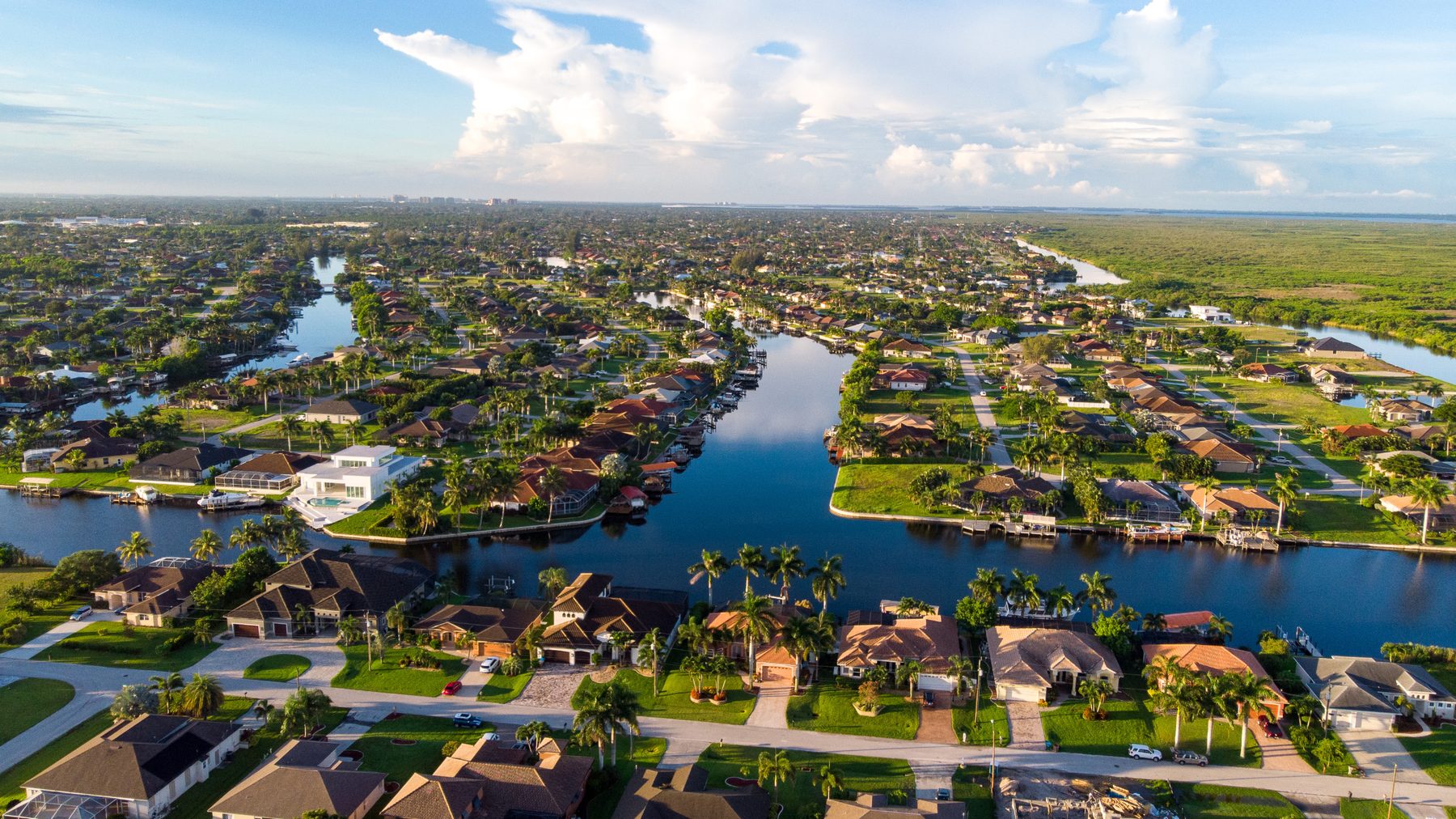
Cape Coral is one of the most distinctive cities in Florida — a planned waterfront community with more than 400 miles of navigable canals, more than any other city in the world. Whether you're drawn by Gulf-access boating, the value of no-HOA ownership, or a growing downtown arts district, Cape Coral consistently surprises buyers with its range and character.
Understanding the canal system
This is the key to buying smartly here. Gulf-access canals connect directly to the Caloosahatchee River and the Gulf of Mexico — you can boat from your backyard to open water — and command a significant premium, typically $100K–$300K+ over comparable freshwater properties. Freshwater canals offer the water view and recreational appeal (kayaking, fishing, paddleboarding) at a lower cost, but without navigable Gulf access. Knowing the difference — and its implications for insurance, utility assessments, and bridge clearances — matters before you make an offer.
The utility assessment question — a real financial consideration
Cape Coral was developed before much of its infrastructure was built out, and some areas still operate on private wells and septic systems. When the city extends public water and sewer service to those areas, homeowners receive a special assessment — a one-time charge that can range from several thousand dollars to over $20,000.
Always verify whether a property is on city utilities or a well/septic system, and whether any future assessments are pending or already paid. This is critical due diligence in Cape Coral specifically.
Types of homes and price ranges
- Dry lot / interior ($250K–$600K): non-waterfront homes in established neighborhoods, often without HOA — a strong value entry point
- Freshwater canal ($300K–$700K): scenic water views and the boating/kayaking lifestyle at a more accessible price than Gulf-access
- Gulf-access canal ($550K–$3M+): direct navigable access to the Caloosahatchee River and the Gulf — highest demand among boaters and investors, private docks and lifts
- Luxury & gated ($700K–$5M+): communities like Burnt Store Marina, Tarpon Point, and Cape Harbour with deep-water access and resort-style amenities
Featured areas
SE Cape Coral is the most established and desirable quadrant — direct Gulf-access canals, short rides to open water, proximity to Tarpon Point Marina and the city's best dining ($500K–$3M+). SW Cape Coral blends Gulf-access estates with more affordable canal-front homes, often on wide sailboat-access canals with assessments already paid ($400K–$2M). The NW Cape growth corridor is the fastest-growing area, with active new construction from DR Horton, Maronda, and LGI on primarily freshwater canals, where utility assessments may still be pending ($280K–$600K). NE & Central Cape offers established, often no-HOA neighborhoods with large lots and solid schools ($280K–$650K). Burnt Store Marina is a gated community with one of Southwest Florida's largest deep-water marinas and direct Charlotte Harbor access, plus golf and tennis ($300K–$2M). And the Downtown & Arts District offers a walkable urban core unique in the region — galleries, restaurants, and the Cape Coral Farmers Market ($300K–$1.2M).
New construction
Cape Coral has one of the most active new construction markets in Southwest Florida, concentrated in the NW growth corridor with DR Horton, Maronda, and LGI Homes. New construction here comes with the same due diligence as resale: verify utility assessment status, confirm canal type, and check bridge clearances if boating access matters. Custom and semi-custom builders also remain active on Gulf-access lots throughout SE and SW Cape Coral for buyers who want to select floor plans and finishes on premier waterfront lots.
Flood risk and insurance
As a canal-crisscrossed coastal city, flood zone designation matters enormously here. Many waterfront and near-water properties fall within FEMA AE or VE zones, requiring flood insurance. Costs have risen significantly since Hurricane Ian (2022) — elevation certificates can meaningfully reduce premiums, and properties with higher first-floor elevations carry a real cost advantage. See our flood insurance costs guide for the broader Southwest Florida picture.